Table of Contents
- North Dakota Home Selling
- Which Areas in North Dakota Offer the Best Return on Investment and Are Easiest for Residential Property Development?
- What Home Styles, Sizes, and Features Tend to Sell Fastest in the North Dakota Market?
- What Should Home Sellers Know About Zoning Laws, Permits, and Regulatory Requirements in North Dakota?
- Which Towns or Cities in North Dakota Are Easiest, and Hardest, When It Comes to Navigating Real Estate Regulations?
- What Are the Most Effective Flipping and Resale Strategies for Maximizing Profit in North Dakota's Housing Market?
- How Should Sellers Price Their Homes to Attract Buyers While Maximizing Value in North Dakota?
- Which Key Economic, Social, and Regulatory Factors Are Driving Current Trends in North Dakota's Local Property Markets?
North Dakota Home Selling
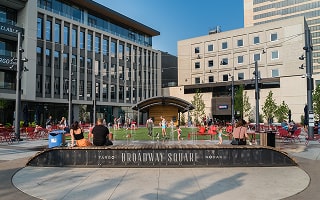
North Dakota's real estate market shows clear growth indicators, with current trends favorable for both buyers and sellers. Home values in the Peace Garden State have experienced steady appreciation, with median sale prices standing at $305,100 as of October 2025 (+7% year over year). Relative to its neighbors, North Dakota's home prices were the most affordable, followed by South Dakota ($321,100), Minnesota ($360,800), and Montana ($545,900).
According to Federal Reserve Economic Data (FRED), homes in North Dakota sold after a median of 61 days on market (DOM), slightly faster than the national median of 63 days. This outpaces slower-moving markets like Montana (85 DOM), but lags behind strong seller's markets like Nebraska (46 DOM) and Minnesota (47 DOM).
One of the key drivers of elevated prices in North Dakota is a consistently tight supply of homes. With an average of 3 months of supply, there remain more interested buyers than sellers. Below-average construction activity (2.91 new housing authorizations per 1,000 residents in 2024) has done little to add new inventory, with builders citing labor shortages and rising costs as the leading obstacles.
In terms of property taxes, North Dakota's moderate average effective rate of 0.99% puts it in the middle of all states. This makes property taxes a manageable expense for most investors and homeowners, and offers a slight edge in affordability relative to South Dakota (1.09%) and Minnesota (1.04%).
Foreclosure rates in North Dakota, and its border states, remain among the lowest in the nation. With just one foreclosure for every 9,865 housing units, homeowners are keeping up with their obligations and supporting a stable housing market environment in the state.
Which Areas in North Dakota Offer the Best Return on Investment and Are Easiest for Residential Property Development?
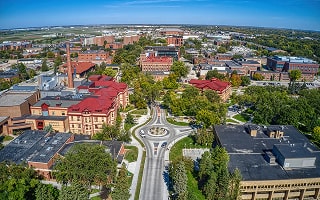
Although the economy in North Dakota is largely influenced by agriculture and oil, the Peace Garden State is experiencing a shift toward more economic diversification, which presents a unique opportunity for real estate investors.
While many local property markets in the state are profitable, return on investment (ROI) potential varies across the state. However, based on market data and local regulatory environments, the following locations may be well positioned to deliver outsized returns and easier property development:
-
Fargo: As the most populous city in the state, Fargo's diversified economy is a local hub for education, healthcare, logistics, and tech. Housing prices in Fargo are 14% lower than the national average, with strong year-round rental demand from working professionals and students.
-
West Fargo: West Fargo is driven by rapid population growth, a low unemployment rate, and a high median household income. Ample developable land keeps per-unit build cost competitive, with strong demand supporting faster-than-average home sales. Some of the most popular West Fargo neighborhoods include West Charleswood, Tintes, South River, Knutson, and Southdale.
-
Wahpeton: After posting a 34% five-year increase in home prices, Wahpeton remains a solid attraction for first-time investors. And with average home values under $229,000, it remains one of the state's most affordable locations to own a property.
-
Minot: Anchored by the Minot Air Force Base, healthcare centers, and agricultural processing facilities, Minot is regarded as the economic hub of northwestern North Dakota. Though the city saw median home values increase by about 8% year over year, prices in Minot remain very accessible at around $270,000.
-
Casselton: Once known as an agricultural community, Casselton has evolved into a commuter neighborhood that appeals to buyers seeking suburban spaces and easy access to Fargo. With limited housing stock, Casselton homes sell quickly, often within a couple of weeks.
-
Bismarck: North Dakota's capital city continues to deliver economic stability, growing demand, and relatively affordable housing. Home prices in the city continue to rise, offering investors strong appreciation potential and quick sales.
-
Grand Forks: Home to the University of North Dakota, Grand Forks sees year-round student rental demand and strong secondary-market sales. Average home values climbed nearly 7% year over year to $282,845, with average rents of around $1,150 per month.
-
Horace: Located about 15 miles outside Fargo, Horace's suburban appeal attracts individuals and families seeking a balance between quiet living and urban convenience.
-
Williston: While the oil industry underpins Williston's local economy, property values have shown considerable resilience amid market fluctuations, making the city an attractive option for long-term real estate investors. To support its growing population, the city also continues to invest in infrastructure developments, including retail, recreation, and healthcare facilities.
-
Grafton: With a median sale price of just $217,000 and steady local rental demand, Grafton attracts North Dakota real estate investors looking for accessible entry points and stable cash flow.
What Home Styles, Sizes, and Features Tend to Sell Fastest in the North Dakota Market?
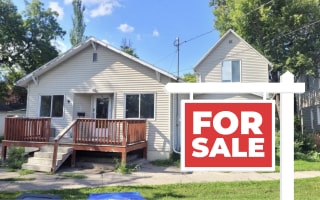
Though seasonality and local market trends affect the speed of home sales, properties listed in the North Dakota housing market typically sell relatively quickly, ranking it in the top 10 fastest housing markets this year. However, for sellers and buyers looking to gauge market speed, it's important to note that certain features and characteristics tend to help a home sell even faster, appealing to more buyers and attracting quick offers.
-
![]()
Bedrooms: Due to first-time buyer demand, entry-level homes, especially those with 3 bedrooms and 2 bathrooms, move fast in North Dakota. These layouts continue to dominate the quick-sale segment of the state's housing market. For instance, in Fargo's new-build subdivisions or Bismarck's established neighborhoods, a 3-bedroom, 2-bath layout often generates multiple offers within the first 14 days of listing.
-
![]()
Size and Lot: Homes with 1,500-2,000 square feet on no more than one acre of land balance a manageable yard with interior living space, selling quickly in urban and suburban areas. For instance, in West Fargo and Mandan, these mid-sized parcels allow enough outdoor space for a garage and play area without triggering excessive taxes and maintenance costs that come with additional acreage.
-
![]()
Style: Ranch-style and modern-transitional designs continue to be a staple for many buyers in North Dakota. This is because buyers appreciate open living areas where the kitchen, dining, and living rooms flow seamlessly. Even in smaller markets, like Jamestown or Williston, turnkey ranch homes with vaulted ceilings and direct access from garage to mud room command the shortest days on market.
In Fargo's North Side historic district, Tudor Revival, Colonial Revival, and American Foursquare styles are often coveted for their charm and character. In Minot's Eastwood Park Historic District, styles like Bungalow, Craftsman, Tudor Revival, and Dutch Colonial sell well due to neighborhood appeal.
-
![]()
Modern Upgrades: Current market trends in the Peace Garden State suggest that turnkey features and updated interiors support faster sales. Examples of features that rank high on buyers' wish lists include updated kitchens with quartz or granite countertops, oversized islands, and stainless steel appliances. Other desirable features include energy-efficient windows, high-performance HVAC systems, and durable composite siding. These features make properties appear move-in ready for buyers and spark quicker sales, especially in competitive markets like Bismarck and Fargo.


What Should Home Sellers Know About Zoning Laws, Permits, and Regulatory Requirements in North Dakota?

Paying close attention to zoning laws, permitting processes, and other regulatory obligations is an important part of maximizing ROI. This is because these laws and obligations directly impact a property's development potential, best uses, and marketability. Investors and developers who understand these regulations can avoid costly delays and legal issues, while also providing buyers and renters with confidence.
Today, many buyers in North Dakota will request a zoning compliance letter during the due diligence period. A zoning compliance letter, which is issued by the local government, can verify that a property adheres to local ordinances and has no open violations that might hinder the sale or future resale opportunities.
Across North Dakota, most municipalities have their own zoning laws and regulatory requirements, which can vary widely. For instance, cities like Bismarck and Minot enforce strong zoning laws, including comprehensive development rules. In Bismarck, sellers and developers are required to navigate regulations that involve conditional use designations and overlay districts.
Conversely, locations outside urban centers, such as Rich Township, have less bureaucratic zoning laws. In these areas, land use regulation is typically minimal and development primarily focuses on agricultural preservation. While these jurisdictions may have basic permitting requirements, they don't usually have complex zoning overlays or strict regulatory review processes.
In municipalities governed by formal zoning boards, especially those adopting North Dakota's zoning codes under Chapters 11-33 or 40-47, variances or special use permits are mandatory via public hearings. During a public hearing, a local board will review proposed plans that don't conform with standard city or county codes, and community input is invited. For example, in Bismarck, this process is required for many redevelopment or land use proposals.
Note that several cities, such as Minot, require a Certificate of Occupancy (CO) before legal occupation following new construction, major renovations, or changes of use. In flood-prone areas of the state, such as Minot, Fargo, Bismarck, Grand Forks, and Mandan, Elevation Certificates or Floodplain Development Permits are typically required before the CO is released.
Investors in historic areas should also be aware of potential design restrictions that aim to preserve local character. In designated districts, exterior renovations may trigger review by the local historic preservation commission. This layer of oversight is most common in communities participating in the Certified Local Government (CLG) program, such as Fargo, Grand Forks, Devils Lake, Bismarck, and Buffalo, as well as Pembina and Walsh counties.
Which Towns or Cities in North Dakota Are Easiest, and Hardest, When It Comes to Navigating Real Estate Regulations?

Staying compliant with local zoning laws and other regulatory processes requires an understanding of the laws and limitations in the jurisdiction where you intend to invest. For example, some jurisdictions may have specific CO or rental licensing requirements. To protect profit margins, avoid potential legal issues, and support investment timelines, home sellers and developers must always stay compliant with local real estate regulations.
Within North Dakota, some areas are known for being development friendly. These municipalities typically have flexible zoning and streamlined permitting processes. On the other hand, other jurisdictions are highly restrictive, and tend to slow development via public hearings or conservative zoning policies.
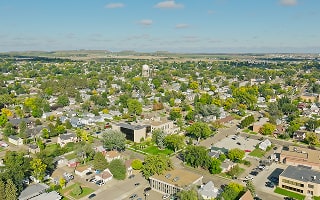
Development-Friendly Areas
These cities and towns are known for being pro-growth, with streamlined permitting, zoning flexibility, and municipal support for housing and economic development.
- McKenzie County: Most new homes and additions generally move forward on state building permit timelines without local land-use hearings.
- Emmons County: Most builds clear county permitting with minimal public notice.
- Stark County: Stark County relies on agricultural-focused zoning that imposes basic setbacks and lot standards but few conditional-use hearings, speeding approvals.
- Dunn County: This county maintains basic overlay regulations tied to oil-field activity, allowing residential builds to proceed on a straightforward building permit track.
Moderately Regulated Areas
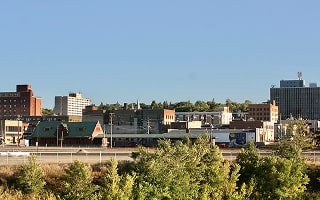
- Minot: Minot uses a traditional residential/mixed-use zoning code and holds planning-board hearings for conditional uses, but with established 30-60-day review windows and clear application checklists.
- Jamestown: Jamestown divides its land into simple residential, commercial, and industrial districts; planning-board reviews are required for major site plans, but rarely lead to multiple public hearings.
- Williston: Williston enforces robust floodplain and oil-impact overlays, yet its growth-oriented planning staff coordinates pre-application meetings that often streamline the full zoning and permitting cycle.
- Dickinson: Dickinson operates under a single unified development ordinance. Therefore, building permits, variances, and conditional-use permits are processed concurrently, cutting overall approval time.
Highly Restrictive or Bureaucratic Areas
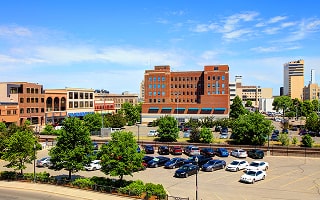
- Fargo: Fargo enforces detailed zoning districts, including historic overlays and extensive environmental and floodplain controls. Projects often require design review, neighborhood notice, and multiple rounds of revision.
- Bismarck: Bismarck layers state-mandated floodway and airport overlays atop its city zoning code. In addition, its Renaissance Zone Authority must sign off on certain changes in the city's Renaissance Zone and downtown.
- Grand Forks: Grand Forks combines strict mixed-use corridors, a university-area overlay, and a highly involved Planning & Zoning Commission. Consequently, projects can face three or more public hearings before final determination.
- Valley City and Grafton: Both locations have designated historic districts in their downtown cores. For investors or owners seeking tax credits or other incentives, exterior changes are subject to strict design review.
Regulatory Climate Factors
Due to significant differences in the regulatory climate across North Dakota's real estate markets, developers and investors find some areas highly accommodating due to their permissive zoning and fast permitting process, while other areas present many obstacles for investors and developers to navigate. Knowing which local markets have a friendly regulatory climate, and which don't, can have a serious impact on renovation, flipping, construction, and returns.
The table below summarizes key regulatory climate factors in North Dakota, along with where they tend to be most prevalent:
Factor |
Impact on Development |
Where It's Found |
|---|---|---|
Zoning Flexibility |
Determines ease of land use |
West Fargo, Mandan, and rural townships in Richland and Cass counties |
Historic Preservation Laws |
Adds restrictions |
Fargo, Grand Forks, Bismarck Cathedral Area, and Minot |
Wetlands/Conservation |
Limits buildable land |
Along the Missouri River basin, such as parts of McLean, Burleigh, and Emmons; the Red River Valley (Fargo, Grand Forks) |
Inclusionary Zoning |
Incentivizes affordable units |
Rare statewide, but may appear in Grand Forks and Fargo comprehensive plans |
Building Code Enforcement |
Affects cost/speed |
Bismarck, Minot, Williston, West Fargo, Dickinson, Mandan, and most cities following North Dakota State Building Code |
Local Politics/NIMBYism* |
Blocks or delays projects |
Certain neighborhoods in Minot, Bismarck, and unincorporated areas seeing oil/gas spillover |
*NIMBYism - Not in My Backyard
What Are the Most Effective Flipping and Resale Strategies for Maximizing Profit in North Dakota's Housing Market?

Using a single flipping or resale strategy may not work in all situations and local property markets in North Dakota. To flip or resell property for maximum profit, it's important to use an approach that's proven to be effective. The following flipping and resale strategies are among the most common for potentially maximizing ROI in North Dakota:
-
![]()
Target Distressed or Foreclosed Homes: Distressed, auction, and bank-owned (REO) properties are typically priced below market value, leaving room for investor profits. Seasoned flippers often buy discounted pre-foreclosures or distressed properties, rehab them, and sell them for full market value. This strategy is particularly popular in Fargo, where there's a higher volume of aging homes in need of renovation. Other established cities, like Minot, Williston, and Dickinson, also offer opportunities for investors to acquire distressed properties.
-
![]()
Use the 70% Rule: This rule was formulated to help buyers ensure they don't overpay, helping preserve their profit margins even if unexpected expenses arise. The rule recommends that buyers offer no more than 70% of the after-repair value (ARV) minus all repair costs. While this rule can apply to deals statewide, it's especially useful in Bismarck, Wahpeton, and Grand Forks, where median home prices and rising demand make disciplined offers critical.
-
![]()
Wholetailing for Speed: This approach recommends that investors do quick, minor touch-ups, such as cleaning, basic landscaping, and painting, before flipping the property. These cosmetic updates are cost-effective and significantly reduce time on the market, minimizing holding times. Wholetailing is ideal in fast-moving, competitively priced neighborhoods and suburban areas around Fargo and West Fargo, where turnover is high and buyers want move-in ready homes.
-
![]()
Build Strong Deal Pipelines: This approach aims to ensure that an investor has a consistent flow of deals from different sources. To build a strong deal pipeline, investors often use lead generation tactics such as direct mail campaigns and targeted Facebook ads. These tactics may be combined with using local data platforms and a network of owners to gain early access to distressed leads before they hit the open market.
-
![]()
Renovate with Quality - Don't Cut Corners: In certain North Dakota markets, such as Fargo, Minot, and Bismarck, buyers are known to demand higher-quality renovations. Therefore, if you want to flip a property in these locations, focus on quality craftsmanship and materials to win buyer trust, avoid inspection setbacks, and command higher prices.
-
![]()
Use the Buy, Rehab, Rent, Refinance, Repeat (BRRRR) Method: As the name suggests, the BRRRR method focuses on generating long-term equity and rental income through a multistep process. Investors buy a property, rehab it, and rent it out, after which they can refinance to recycle capital for new deals. This method is recommended in steady rental markets such as Grand Forks and Bismarck.
-
![]()
Try Value-Add Flipping: In municipalities where zoning allows, developers or investors can add value by expanding square footage, adding bedrooms or bathrooms, or converting to multiunit housing. These upgrades often increase the ARV significantly. Value-add flipping is often most effective in older parts of Fargo or Bismarck, where multifamily conversions or additions are commonly permitted and may deliver sizable returns.
-
![]()
Buy at Auction and Off Market: This approach involves looking for estate sales, direct-to-seller deals, and other off-market options. It tends to work best in areas such as Cass and Burleigh counties.
-
![]()
Explore Creative Financing and Seller Financing: This approach can be useful when cash is tight, as it allows investors to use strategies such as assumable mortgages or low down payments when sellers have high equity. This method avoids traditional financial constraints and fits rural areas or older neighborhoods in Fargo or around Bismarck, where sellers may be more open to creative exit options for inherited or long-held properties.
-
![]()
Invest in Tax Deeds: By investing in tax deeds, buyers can acquire properties via tax sales. Investors who successfully navigate these deals can usually secure properties at 40%-70% off market values. Post-forfeiture, investors who clear the title can sell these homes for a healthy profit.
-
![]()
Leverage Staging and Strategic Pricing: Staging a property focuses on using lighting, furnishings, and decor to make a property more appealing to buyers. This process improves first impressions and often leads to higher offers. By combining staging with strategic pricing, sellers can attract buyers and quick offers, helping maximize return on investment. Staging and strategic pricing work well in all local markets in North Dakota.


How Should Sellers Price Their Homes to Attract Buyers While Maximizing Value in North Dakota?

A property's list price is one of the most important factors in determining how long it will spend on the market. While undervaluing a property may lead to lower profit margins, overpricing can lead to extended days on the market. To strike the right balance, it's recommended that home sellers work with a local real estate agent or certified appraiser who can analyze active, pending, and recently sold comparable properties from the last 90 days. The goal of this analysis is to ensure that the list price matches the current market environment, helping facilitate a quick sale and maximize returns.
The following are some of the most effective pricing strategies used by sellers and investors in North Dakota:
-
![]() Pricing Just Below Below Market Thresholds: This strategy involves setting your asking price slightly below major thresholds. For instance, instead of listing a property at $300,000, the seller may list at $299,900. This increases visibility in online searches, since many buyers filter listings based on price bands. It also helps increase showings and traffic at open houses, potentially leading to more offers. Pricing just below market thresholds works best in highly competitive markets such as Fargo, West Fargo, and Bismarck, where homes are often clustered around similar price points.
Pricing Just Below Below Market Thresholds: This strategy involves setting your asking price slightly below major thresholds. For instance, instead of listing a property at $300,000, the seller may list at $299,900. This increases visibility in online searches, since many buyers filter listings based on price bands. It also helps increase showings and traffic at open houses, potentially leading to more offers. Pricing just below market thresholds works best in highly competitive markets such as Fargo, West Fargo, and Bismarck, where homes are often clustered around similar price points.
-
![]() Charm Pricing (Psychological Pricing): Charm pricing involves listing a property at a non-round number, such as $249,900 or $199,950 rather than a neat $250,000 or $200,000. A home listed at $199,950 appears significantly cheaper than $200,000, even though the difference is minor. This emotional pricing tactic is especially effective in suburban areas and mid-tier markets like Wahpeton, Valley City, or Grand Forks, where buyers are often more price-conscious.
Charm Pricing (Psychological Pricing): Charm pricing involves listing a property at a non-round number, such as $249,900 or $199,950 rather than a neat $250,000 or $200,000. A home listed at $199,950 appears significantly cheaper than $200,000, even though the difference is minor. This emotional pricing tactic is especially effective in suburban areas and mid-tier markets like Wahpeton, Valley City, or Grand Forks, where buyers are often more price-conscious.
-
![]() Pricing to Create a Bidding War: This approach involves listing a property slightly below market value to attract multiple buyers and create a sense of urgency. This approach suits seller's markets like Fargo, West Fargo, Bismarck, and parts of Minot, especially in neighborhoods with top-rated schools and limited inventory, as these areas typically have higher buyer demand than supply.
Pricing to Create a Bidding War: This approach involves listing a property slightly below market value to attract multiple buyers and create a sense of urgency. This approach suits seller's markets like Fargo, West Fargo, Bismarck, and parts of Minot, especially in neighborhoods with top-rated schools and limited inventory, as these areas typically have higher buyer demand than supply.
-
![]() High-Anchor Pricing (Test the Waters): High-anchor pricing involves setting the asking price at the top of the market range. Since buyers expect to negotiate, this approach leaves a buffer for seller concessions or price adjustments. Starting high also allows the buyer and seller to meet in the middle without underselling. This approach works best in Bismarck, Grand Forks, or Dickinson, where buyers are often willing to negotiate and appraisals support broader value ranges, especially for luxury or custom homes.
High-Anchor Pricing (Test the Waters): High-anchor pricing involves setting the asking price at the top of the market range. Since buyers expect to negotiate, this approach leaves a buffer for seller concessions or price adjustments. Starting high also allows the buyer and seller to meet in the middle without underselling. This approach works best in Bismarck, Grand Forks, or Dickinson, where buyers are often willing to negotiate and appraisals support broader value ranges, especially for luxury or custom homes.
-
![]() Price-Per-Square-Foot Benchmarking: This method is generally recommended for cookie-cutter neighborhoods, where homes are very similar in size, layout, and style. It's a logical and data-driven approach that recommends setting the asking price based on what comparable homes are selling for per square foot. This strategy is ideal in newer subdivisions in West Fargo, South Fargo, and Bismarck, or in condo communities, where homes are relatively uniform and price-per-foot data is easy to benchmark.
Price-Per-Square-Foot Benchmarking: This method is generally recommended for cookie-cutter neighborhoods, where homes are very similar in size, layout, and style. It's a logical and data-driven approach that recommends setting the asking price based on what comparable homes are selling for per square foot. This strategy is ideal in newer subdivisions in West Fargo, South Fargo, and Bismarck, or in condo communities, where homes are relatively uniform and price-per-foot data is easy to benchmark.
-
![]() Appraisal-Backed Pricing: Appraisal-backed pricing involves setting the asking price close to its expected appraised value. It's particularly useful if the buyer is using FHA, VA, or USDA financing, as lenders typically only approve loans where the appraised value matches or exceeds the purchase price. If the appraisal comes in low, buyers may have to renegotiate, cover this gap in cash, or cancel the contract. By pricing a home close to where the home is likely to appraise, sellers reduce the risk of delayed or failed closings. Appraisal-backed pricing works best in cities like Grand Forks, Minot, and Bismarck, where there's a high concentration of first-time buyers, military families, or other buyers who rely on government-backed loans.
Appraisal-Backed Pricing: Appraisal-backed pricing involves setting the asking price close to its expected appraised value. It's particularly useful if the buyer is using FHA, VA, or USDA financing, as lenders typically only approve loans where the appraised value matches or exceeds the purchase price. If the appraisal comes in low, buyers may have to renegotiate, cover this gap in cash, or cancel the contract. By pricing a home close to where the home is likely to appraise, sellers reduce the risk of delayed or failed closings. Appraisal-backed pricing works best in cities like Grand Forks, Minot, and Bismarck, where there's a high concentration of first-time buyers, military families, or other buyers who rely on government-backed loans.
-
![]() Net-to-Seller Pricing: Net-to-seller pricing suggests that a seller sets a realistic list price by calculating their desired take-home amount after subtracting expenses like agent commissions, closing costs, taxes, and potential repairs or concessions. This strategy works well in higher-end or mid-range markets like Fargo and Bismarck, where transaction costs may be higher and home sellers are profit-focused.
Net-to-Seller Pricing: Net-to-seller pricing suggests that a seller sets a realistic list price by calculating their desired take-home amount after subtracting expenses like agent commissions, closing costs, taxes, and potential repairs or concessions. This strategy works well in higher-end or mid-range markets like Fargo and Bismarck, where transaction costs may be higher and home sellers are profit-focused.
-
![]() Urgency Pricing (Motivated Seller Strategy): This strategy involves pricing below market value to attract immediate interest and sell quickly. It's often used in time-sensitive situations, such as divorces, probate settlements, pre-foreclosures, or relocations. This strategy works because buyers respond to urgency and perceived bargains. Pricing aggressively low ensures immediate traction, multiple showings, and quick offers that are often all cash. This approach works well across the state but is commonly used in smaller towns, such as Jamestown, Wahpeton, and Grafton, or in rural areas where property turnover is slower and sellers may have fewer options for a quick exit.
Urgency Pricing (Motivated Seller Strategy): This strategy involves pricing below market value to attract immediate interest and sell quickly. It's often used in time-sensitive situations, such as divorces, probate settlements, pre-foreclosures, or relocations. This strategy works because buyers respond to urgency and perceived bargains. Pricing aggressively low ensures immediate traction, multiple showings, and quick offers that are often all cash. This approach works well across the state but is commonly used in smaller towns, such as Jamestown, Wahpeton, and Grafton, or in rural areas where property turnover is slower and sellers may have fewer options for a quick exit.


To maximize returns, home sellers in North Dakota should tailor their pricing strategy to reflect current market conditions and local real estate trends. Using the table below, sellers can match their strategy to the current market condition:
Market Condition |
Best Strategy |
|---|---|
Seller's Market |
Underpricing for a bidding war |
Buyer's Market |
Charm pricing or net-to-seller |
Unique, luxury home |
High-anchor + value justification |
Entry-level home |
Just below threshold |
Urgent sale needed |
Aggressive urgency pricing |
Flipper or investor listing |
Appraisal-backed or price-per-square-foot |
Which Key Economic, Social, and Regulatory Factors Are Driving Current Trends in North Dakota's Local Property Markets?

North Dakota's housing market is generally trending upward, though the rate of growth is cooling. While overall demand remains strong across various municipalities, locality and seasonality contribute to some fluctuations in supply, demand, and price.
Whether you're planning on selling or buying, it's important to consider the underlying factors shaping real estate supply and demand in the state, which impact prices, how quickly properties sell, and which areas offer the best potential returns on investment. These factors include the following:
![]() Economic Factors
Economic Factors
 Economic Factors
North Dakota's economy is bolstered by its energy sector, which often experiences more volatility than other industries. The state of several local economies, such as Williston and Dickinson, tends to move in lockstep with oil prices. Statewide, a low unemployment rate (2.3%), rising wages, and an expanding labor market support home price growth. In addition, North Dakota's low cost of living relative to U.S. averages and many other Midwest markets continues to make homeownership more attainable in the Peace Garden State.
Despite these factors, housing inventory remains tight statewide, which has sustained pressure on home prices. As of October 2025, the average home value reached approximately $278,677, a 4.2% year-over-year increase. In high-growth areas like Williston, where the local economy is influenced by oil production, home values rose by more than 7% year over year, and houses spent just 19 days on the market.
![]() Demographic and Social Factors
Demographic and Social Factors
 Demographic and Social Factors
North Dakota's population has steadily grown in recent years, partly due to oil booms that attracted an influx of workers. With about 17% of North Dakotans aged 65 or older, demand for retirement-friendly housing options has increased, especially in places like Fargo, Bismarck, and Grand Forks. In addition, smaller oil towns, such as Williston and Dickinson, experienced rapid in-migration during peak drilling phases followed by modest declines as producers pulled back.
Also, with North Dakota ranked the fourth-youngest state, there's been a rise in demand for entry-level homes as first-time home buyers have increased. Still, the aging baby-boom generation constrains resale supply, often opting to age in place rather than relocate.
![]() Regulatory and Legal Framework
Regulatory and Legal Framework
 Regulatory and Legal Framework
Land-use regulations vary across North Dakota municipalities. For instance, zoning density limits and minimum lot-size rules in cities like Fargo and Bismarck can limit multifamily projects, keeping single-family home supply tight in desirable neighborhoods. Note that the Peace Garden State prohibits rent control, meaning landlords can price based on what the market will bear.
![]() Taxation and Fiscal Policy
Taxation and Fiscal Policy
North Dakota imposes relatively moderate property taxes, along with some targeted credits. For home sellers, income from property sales is taxed as ordinary income, with a top marginal rate of 2.50%. However, there is a 40% exclusion on long-term capital gains of home sales when the asset is held for more than three years.
The state also offers tax credits and exemptions in certain situations. For example, Homestead Credit for primary residences and exemptions for seniors and disabled homeowners can reduce annual bills by up to 60%-100% for qualifying households. In addition, the state doesn't charge a real estate transfer tax at closing, which further lowers transaction costs.
![]() Housing Policy and Government Programs
Housing Policy and Government Programs
Housing assistance in North Dakota is largely managed by the North Dakota Housing Finance Agency, whose offerings, such as FirstHome, include down payment and closing cost assistance for first-time and low-income buyers. HUD-administered grants also support low-income residents, green home retrofits, and other initiatives, often via local community action agencies. Furthermore, state-backed mortgage programs and incentives exist to help buyers overcome rising home prices and limited housing stock, particularly in markets like Fargo and Minot, where demand remains strong.
![]() Infrastructure and Development Trends
Infrastructure and Development Trends
 Infrastructure and Development Trends
Infrastructure strain exists in some parts of North Dakota, as population and economic growth have outpaced public service expansion. In cities like Williston and Tioga, both located in the Bakken oil region, sudden population increases during oil booms resulted in housing shortages and the rise of temporary workforce housing. Although growth has stabilized, pressure to maintain local infrastructure continues to pose challenges.
Meanwhile, more stable and gradual development is occurring around Bismarck and Fargo, where suburbs continue to expand with the support of improved infrastructure and municipal planning. Consequently, these metro-adjacent areas are increasingly attractive for both families and investors looking for long-term residential investment opportunities.
![]() Market Sentiment and Investor Behavior
Market Sentiment and Investor Behavior
 Market Sentiment and Investor Behavior
North Dakota remains a seller's market, where limited inventory and high demand drive relatively quick sales and support elevated prices. Homebuyers tend to favor move-in-ready homes, and properties with strong curb appeal command premiums. In metros with slower inventory turnover, such as Minot and Williston, buyers may have some leverage, prompting developers to pivot toward lower-cost-per-square-foot condo and townhome projects.
Median home prices in North Dakota climbed 6.8% year over year in October 2025 to $305,100. Yield-seeking investors continue to target the North Dakota real estate market due to low prices, a stable rental market, and moderate tax environment. Note that median rents are around $1,100 per month, putting cap rates around 7% on multifamily assets in primary metros. Secondary markets in Stark and Ward counties also draw interest due to even lower entry prices and the potential for economic diversification beyond the energy sector.
The North Dakota real estate market remains an attractive and dynamic landscape for investors, with affordable housing options and a high quality of life. While the state's property values have appreciated steadily, they remain more accessible than those in neighboring Montana, Minnesota, and South Dakota, ensuring that both end users and investors continue to view the Peace Garden State as a viable option.
Beyond pricing and sales dynamics, moderate property tax rates, low foreclosure activity, and supportive housing programs reinforce North Dakota's reputation as a stable environment for long-term real estate investment. The market's diversity, from Fargo's robust rental opportunities and Bismarck's government-focused economy to energy hubs like Williston, demonstrates that opportunities exist for investors and homebuyers at multiple price points and strategies.
As zoning laws, infrastructure demands, and demographic shifts continue to shape market conditions, successful investments in North Dakota real estate require careful attention to local rules and tailored pricing approaches. North Dakota's housing market remains one of the Midwest's most attractive property markets, particularly for those seeking strong returns without the pricing barriers common in nearby states.
Table of Contents
- North Dakota Home Selling
- Which Areas in North Dakota Offer the Best Return on Investment and Are Easiest for Residential Property Development?
- What Home Styles, Sizes, and Features Tend to Sell Fastest in the North Dakota Market?
- What Should Home Sellers Know About Zoning Laws, Permits, and Regulatory Requirements in North Dakota?
- Which Towns or Cities in North Dakota Are Easiest, and Hardest, When It Comes to Navigating Real Estate Regulations?
- What Are the Most Effective Flipping and Resale Strategies for Maximizing Profit in North Dakota's Housing Market?
- How Should Sellers Price Their Homes to Attract Buyers While Maximizing Value in North Dakota?
- Which Key Economic, Social, and Regulatory Factors Are Driving Current Trends in North Dakota's Local Property Markets?